Oceania: A World Held Together By Water
Oceania is misunderstood.
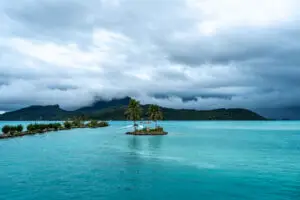
Scattered across a map, it’s easy to see why. Sea swallows land. Space stretches between islands, vast and blue. Distant from the world’s major landmasses, it’s not so surprising that Oceania sometimes feels like a collection of far-flung places — places we only know through dramatic imagery.
In fact, this is far from the truth.
If we look more closely, it becomes clear that Oceania is not at all a place of separation. It is a place of connection. Of knowledge. Of movement. Of relationship. Oceania is a region created and held together by the ocean itself.
To experience Oceania is to grapple with distance, time, and connection in entirely new ways. It is to see slowness as virtue, presence as requirement, and people as priority. It is to move through space at a pace that asks for patience, awareness, and respect.
On the Pacific, between islands and across time, the real stories of Oceania are waiting.
French Polynesia, Micronesia, Melanesia, Navigators
Pacific as Connector, Not Divider
The ocean is an act of separation in most parts of the world.
In Oceania, it’s the opposite.
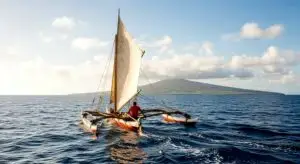
For thousands of years, the Pacific has been an instrument of connection. It has been a highway, not a void. The people of Oceania have long moved across it with intention and deep understanding. History recalls travelers using stars, currents, bird migrations, and other methods for finding and following swells. For millennia, knowledge was stored in the people themselves rather than on paper, preserved through memory and practice and careful teaching.
Seen from this vantage point, the idea of scale changes. Landscapes that feel empty and distant to an outsider are dense with mapping and meaning to an insider. Distance is not a thing to conquer, but to understand.
French Polynesia: Life Shaped by Water
Postcard French Polynesia offers one story.
Day to day life lives closer to the surface.
The latter is marked in essential ways by water.
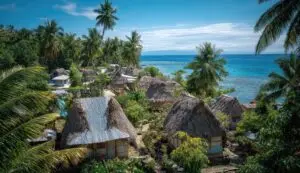
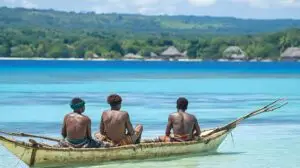
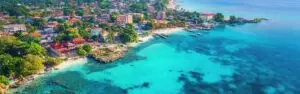
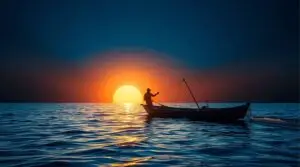
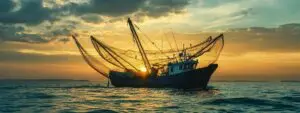
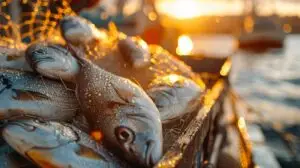
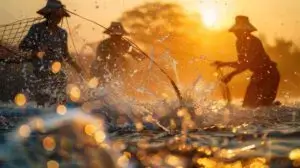
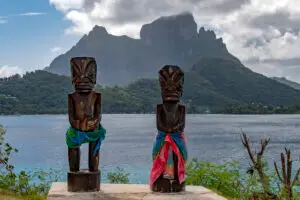
French Polynesia is a place where the sea feeds families, connects islands, and shapes daily rhythms in real ways. Boats move regularly between communities and villages, often as common as cars. Fishing is practical and local, not romantic. Islanders live and work along the coast because that’s how their society was structured.
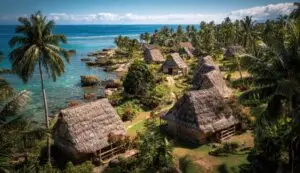
Village life and local rhythms sit alongside (but not outside of) extraordinary natural beauty. Work happens here. Families live here. Culture adapts and moves forward instead of being paused in time. Visitors explore, discover, and learn — but French Polynesia is never simply “visited.” It is lived.
Micronesia: Distance as Daily Reality
Micronesia encompasses a wide geographic area in the Pacific Ocean. Despite covering an oceanic archipelago, the land itself is small.
The distances between islands are vast. These are communities separated by thousands of miles of open ocean and international borders, a fact of life that shapes daily rhythms as much as anything else.
Palau presents conservation as a part of identity. Tourism sells it — and then visitors see it. Fishing is restricted. Marine protected areas abound. Food culture, economy, and way of life are built around and reliant on the sea.
Micronesia is defined in large part by this. The Federated States of Micronesia, for example, creates culture and daily life in part around these physical realities. Governance, travel, community life — it all must be reconciled with geography. The next island is a real place. But it’s not a short hop away. Connection takes work.
The Marshall Islands present another angle on these themes. The entire nation is nearly at sea level, a fact that affects everything from infrastructure to daily life to culture. The ocean is nearby, and there is a constant awareness of its power. Life is lived here.
Across the islands of Micronesia, the ocean is not a distant barrier or an inconvenience. It is powerful, present, and central.
Melanesia: Where Land Takes the Lead
Melanesia feels different in almost every way as soon as you arrive.
The land is more pronounced. Islands are often bigger, with mountainous interiors, thick forests, and river systems that shape patterns of settlement and movement. Traveling between communities, it’s clear that they are often not just coastal, but often inland as well. For many communities, the land plays a central role in daily rhythms.
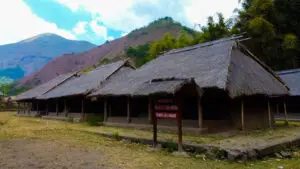
Vanuatu is one example where village life is both a constant and a focus. People live and work here as their ancestors did, with traditions adapting rather than disappearing. Land plays a large part in the story.
Solomon Islands, too, paint a picture of land and forest intermixed with sea. The country holds incredible local knowledge that guides fishing, farming, and travel between and across islands. It’s less show than practice, less tourism-driven than necessary.
In Papua New Guinea, land also plays a major part, not just geographically but culturally. PNG holds a staggering array of diversity. Hundreds of different cultures and languages exist, often in villages and communities within walking distance of one another. Geography seems to work against homogeneity here, with islands, mountains, and valleys creating natural barriers that have allowed this level of diversity to persist.
What you find across Melanesia is that it resists easy generalization. You’ll find that there’s no one story of the region at all. Instead, there are many, layered and lived.
Navigation, Knowledge, and Movement
Movement in Oceania was always intentional.
Navigation was never accidental.
Precision and attention was vital, and the tools and skills developed over centuries to make it possible. Canoes were purpose-built, designed through refinement to favor long-distance stability as much as speed. Routes were memorized and taught and practiced.
The ocean itself was a map, offering signs and markers to those who could read them. Swells, stars, and winds guided movement from place to place. Wildlife migrations provided patterns to follow, too.
The navigation knowledge system itself is one of the world’s most sophisticated natural understandings of natural navigation. It also is one more piece of evidence for the big-picture truth of Oceania: that movement is cultural.
Travel That Demands Awareness
Travel through Oceania is not easy.
Distance matters. Infrastructure and schedules are inconsistent. Weather, sea, and local priorities bend timing and availability. Traveling in Oceania demands both attention and flexibility, qualities that challenge those of us more accustomed to efficiency, consistency, and speed.
This is also where Oceania has the most to offer as a place to visit.
Presence and learning become priorities over pace and checking off boxes. Respect is a requirement that begins well before you arrive. Traveling here thoughtfully requires patience, humility, and curiosity. It asks you to listen — to place, to people, to history.
What Oceania Leaves With You
Oceania is not a loud place.
The lessons it offers arrive quietly. They come through open horizons and patient journeys, local rhythms and moments of stillness. Experiencing Oceania shifts the way you think about distance and connection. It teaches that space does not equal separation.
The Pacific has always been a place of movement, of knowledge, and of relationship. To experience Oceania is to catch a glimpse of a worldview that values connection as a verb instead of a given.
And long after the islands are no longer in view, the perspective lingers.
Until next time,
Amy
A.K.A The Willing Traveler
| have passport will travel