Australia: A Place That Shifts Your Relationship with Distance
Australia reveals itself slowly. It doesn’t try to wow you at first glance. Instead, Australia takes you mile by mile, coast to desert, city to silence. And in that journey, you discover the country has gently realigned your sense of distance, time, and how you experience travel.
Travel in Australia is not something you speed through. It’s something you feel. It’s a place where space and distance are physical, where the land remembers, and the present moment exists alongside some of the oldest living narratives on Earth. Australia is a country that demands your patience. Rewards your curiosity. Challenges you to slow down and look beyond.
Understanding Scale — The Immensity of Distance
Scale is one of the first lessons Australia imparts.
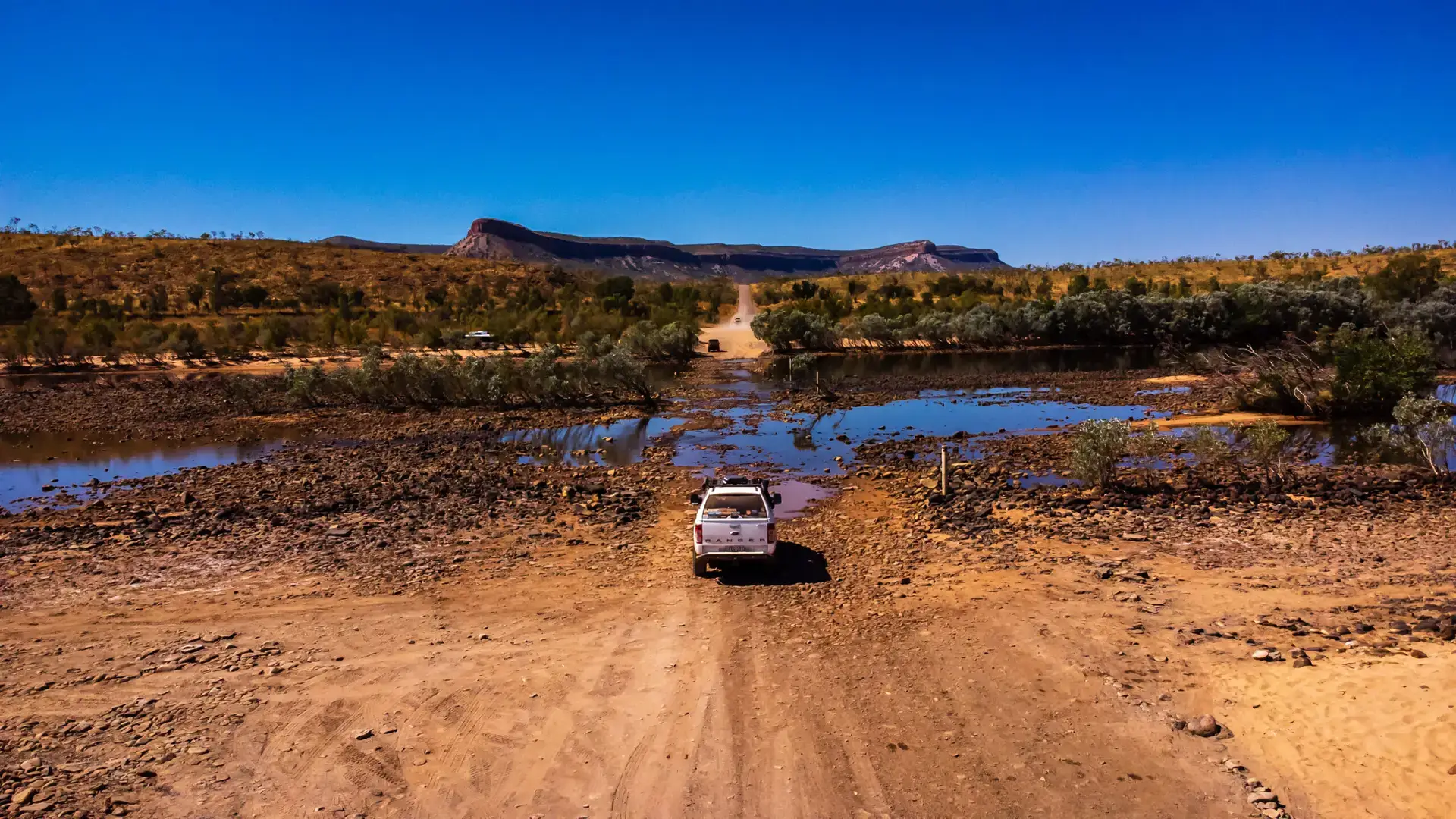
The map makes Australia appear compact and conquerable. The reality of standing on its soil is humbling. The roads run longer than they promise. The horizon plays tricks on you as you approach it. Landmarks seem within reach only to unfold into hours of driving — and that’s by design.
The vastness is part of the experience. It forces you to recalibrate. The distances give you space to think, space to breathe. Distance becomes a currency, and time is your companion. The urge to rush fades when rushing simply becomes untenable.
Australia is a land where the space between points is as important as the destinations.
History Carved into the Land
Long before the modern borders, highways, and cities, Australia was already a land teeming with culture, language, and stories.
Indigenous Australians have been connected to Country for more than 65,000 years, the longest continuous living culture on the planet. This history is alive in landforms, waterways, rock art, songlines, and environmental knowledge that has been passed down through the generations.
You sense it most in the quiet places: in the deserts, on the coast, and across landscapes that look unchanged by time yet are imbued with layers of meaning. The landscape itself becomes an archive.
Acknowledging and respecting this history is essential. It provides context and depth and honors a country that existed long before European settlement and continues to evolve today.
Colonization, Complexity, and Resilience
Australia’s history is layered, complex, and still being unpacked.
British colonization brought significant change, dispossession, and loss, particularly for Indigenous peoples. It also laid the foundation for the cities, infrastructure, and systems you’ll encounter today. These realities coexist.
What’s remarkable, though, is not tidy resolution but resilience. A nation still grappling with its history, still learning to share its complete story, still developing its practices around acknowledgment and education.
Fully understanding Australia means making space for all of this. For the beauty and discomfort, progress, and reckoning.
The Ocean’s Influence
Australia has a close relationship with the ocean.
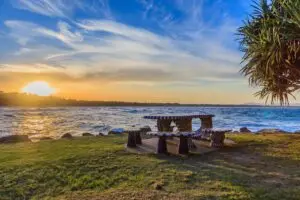
With thousands of miles of coastline, the sea is not a backdrop to life in Australia; it’s a way of life. The cities lean toward it. Neighborhoods plan their days around tides, temperature, and light. Morning swims happen before the day even starts. Evening meals end with salt in the air and sand on your feet.
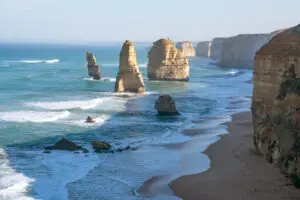
The coast itself varies. Rugged, cliff-lined shorelines to endless, empty beaches. It’s wild in some places, gentle in others, but always present.
The ocean is part of what shapes how Australians live their lives: relaxed but aware, casual but with a deep respect for nature’s power.
Spaces and Urban Life
Australia’s cities are a departure from many others — not because they’re quieter but because they have space.
Sydney
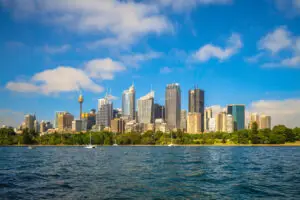
Sydney buzzes with energy but never feels cramped. The harbor front opens the city up to the sky, catching light from every angle. Ferries crisscross daily life. Coastal walks replace crowded streets. Nature is never far away.
Melbourne
Melbourne is a layer cake: thoughtful, creative, and culturally rich. Coffee here isn’t a trend; it’s a ritual. Laneways reveal art, music, and hidden stories. The city rewards those willing to wander slowly and with curiosity.
Other Cities
The same can be said for most Australian cities. They feel more livable than overwhelming. Parks are valued. Outdoor spaces are prized. Architecture and planning are designed with light in mind. This creates a style of urban life that is breathable.
Animals That Live on Their Own Terms
Wildlife in Australia doesn’t perform for you; it simply is.
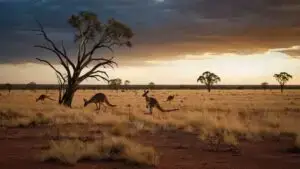
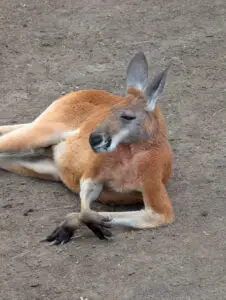
Kangaroos leap where you least expect it. Koalas quietly munch on eucalyptus trees. Fish and marine life abound in the clear waters. Much of it is endemic, found nowhere else on the planet.
What’s more remarkable, though, is how integrated wildlife seems into the landscape. It’s not fenced off for your entertainment. It’s part of the daily rhythm of life, a reminder that here, humans are guests in this story, not the main characters.
One of the most humbling examples of this unfolds just south of Melbourne on Phillip Island. At dusk, little penguins — the smallest penguin species in the world — emerge from the Southern Ocean and make their way up the beach toward their burrows. Visitors stand silently along the boardwalk as the penguins waddle past, sometimes directly over your feet, entirely focused on getting home. There is no spectacle, no narration, no sense that the moment is staged. You simply step aside and witness it. It’s a quiet reminder that in Australia, wildlife does not exist for us — we exist alongside it, briefly and respectfully.
Beyond Beaches: Rainforests, Deserts, Ancient Terrain
Summing up Australia’s terrain and landscapes feels reductive.
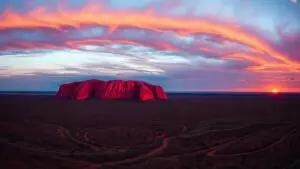
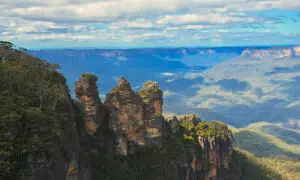
Rainforests drip with life, moss, and ancient growth. Waterfalls cascade through canopies. Deserts are endless, painted in reds and ochres, shaped more by time than climate.
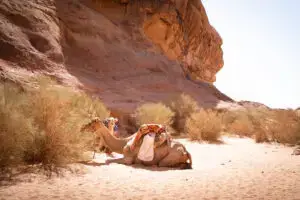
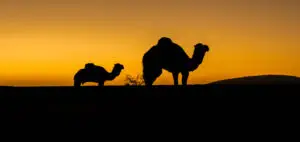
One of the outback’s quiet surprises is the presence of camels. Introduced in the 1840s as ideal pack animals for Australia’s dry interior, camels proved so well suited to the environment that many were eventually released, creating what is now the world’s largest feral camel population. Today, camel safaris from places like Alice Springs offer a different way to experience the desert — slow, elevated, and contemplative. Moving across the landscape at a camel’s pace gives you time to absorb the vastness, the silence, and the subtle shifts in color and terrain. What begins as an unexpected novelty often becomes one of the most memorable ways to understand the scale and adaptability of the Australian outback.
Gorges are pockets of water hidden in arid places. Rock formations tell stories of ancient geology. They are powerful, honest, and enduring. These aren’t landscapes designed to be “pretty” but to survive.
The Food
Modern Australian cuisine is diverse, global, and ingredient-driven, much like the country itself.
Expect to see fresh seafood, Asian and other international influences, Mediterranean techniques, Indigenous ingredients, and European traditions all on the plate. Meals are often intentional but unfussy.
Australia is also a country with some of the world’s best wine regions, where long lunches and unhurried afternoons are part of the culture. Food, like life, is meant to be enjoyed.
Distance, Road Trips, and Traveling Slow
Traveling in Australia means being intentional.
Distances are real. Planning is critical. Road trips become a meditation. Flights connect vast distances that feel like separate worlds. Train routes snake across landscapes that seem to stretch on forever.
This changes your mindset. You stop trying to “do it all.” Instead, you become more selective about your experiences. Australia isn’t a place that rewards frenzied itineraries; it rewards presence.
The Australian Lifestyle
There is a groundedness to daily life in Australia.
Space, the outdoors, and community are valued. The culture is often described as laid-back, but a better word is practical. Life bends to the reality of climate, geography, and vast distances.
Conversations are direct. Hospitality is sincere. There’s a lack of pretension and more presence.
Why Australia Stays With You
Australia shifts your sense of scale and space — both physically and emotionally.
It teaches you patience. It recalibrates your expectations. It reminds you that travel doesn’t have to be dense to be meaningful. Sometimes, the space between places, the quietness, is the experience.
You’ll look back and remember the empty roads and empty skies and how time seemed to stretch and pause. Australia doesn’t scream to be noticed; it earns it slowly.
And that is why it stays with you.
If you have not yet experienced Australia, add it to your bucket list. You won’t regret it. I’ve been two times and it honestly just scratched the surface of all this place has to offer.
Until next time,
Amy
A.K.A The Willing Traveler
| have passport will travel





P.S. You should ask me about my experience in the Outback and the Camel safari I did …