
Brazil Beyond the First Impression
Uruguay: The Quiet Country That Stays With You
I didn’t know a great deal about Uruguay before I started putting together this Discover Series.
I knew where it was. I’d heard of Punta del Este. I knew it shared borders with Brazil and Argentina.
And that was about it.
Then I started digging.
What surprised me wasn’t one particular landmark or some place I’d somehow never heard of. It was how often I stopped and thought, I’d like that.
Historic streets where wandering seems more important than getting somewhere. A coastline that changes from lively beach towns to long, quiet stretches of ocean. Meals that aren’t meant to be rushed. A capital city where people actually seem to use the waterfront as part of everyday life.
Uruguay started feeling less like a country I was researching and more like one I could imagine spending time in.
That’s a pretty big difference.
It also doesn’t seem particularly interested in competing for attention. Brazil and Argentina tend to get much of the travel spotlight in this part of South America. Uruguay just seems to quietly get on with being Uruguay.
I rather like that.
Small Country. Plenty to Discover.
Uruguay isn’t particularly large, which may be one of its advantages for a traveler.
You could spend time in Montevideo, wander the old streets of Colonia del Sacramento, follow the coast toward Punta del Este and beyond, and still leave room for the countryside.
Not all in one frantic day, mind you. That would defeat the purpose entirely.
I’ve never been particularly interested in racing from one famous attraction to another just so I can say I’ve seen them. Give me enough time to turn down a road because it looks interesting, stop somewhere I hadn’t planned to stop, or sit over lunch longer than expected.
Uruguay seems suited to that kind of travel.
The distances are manageable, but more importantly, the places themselves seem to encourage slowing down.
For me, that’s a pretty good combination.
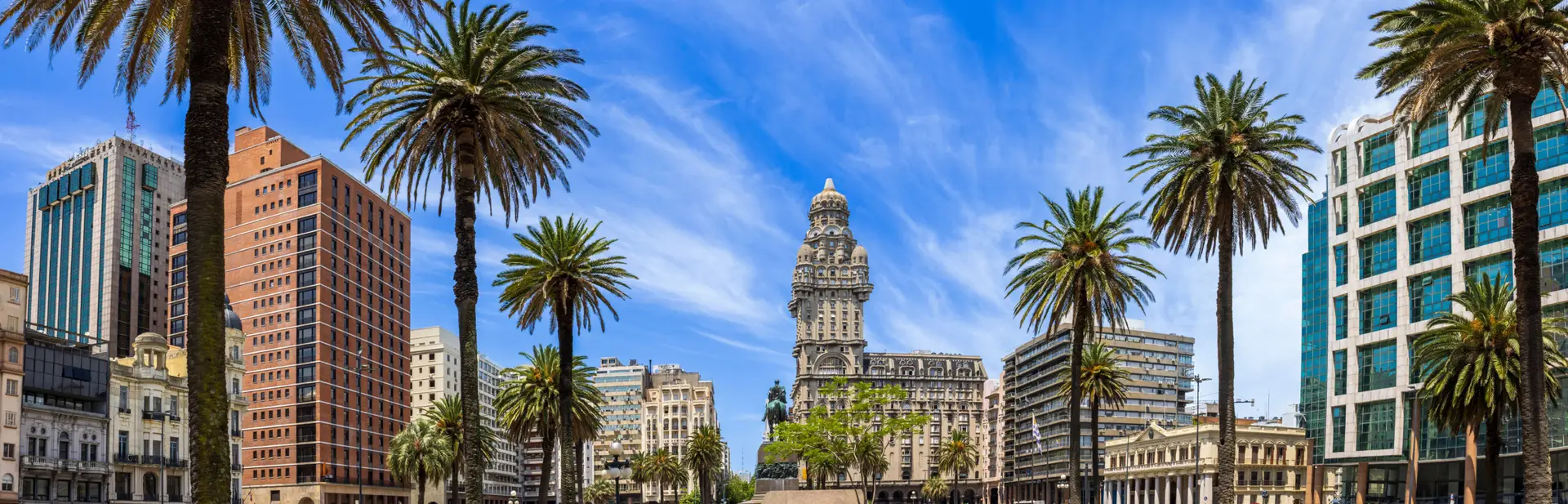
Montevideo Isn’t Trying to Be Anyone Else
Of everything I looked at in Montevideo, I kept coming back to the Rambla.
It stretches for miles along the Río de la Plata, but what caught my attention wasn’t simply the waterfront itself. It was how people use it.
They walk. Ride bikes. Sit on benches. Watch the water. Meet friends.
It doesn’t appear to exist primarily for visitors. It’s simply part of the city.
I’d probably spend far too much time there.
Away from the water, Montevideo seems to have an interesting mix of old and new without either one completely taking over. There are markets and museums, cafés and public art, older architecture and everyday neighborhoods.
And then there’s Ciudad Vieja.
That’s probably where I’d start wandering.
The photographs that caught my attention weren’t necessarily of the major buildings. I kept noticing weathered doors, colorful facades, narrow streets and small plazas.
Those are exactly the kinds of details I tend to photograph when I travel. I can visit the important landmark too, but there’s a very good chance I’ll come home with more pictures of doors and windows.
I’ve been known to do that.
Colonia After Everyone Goes Home
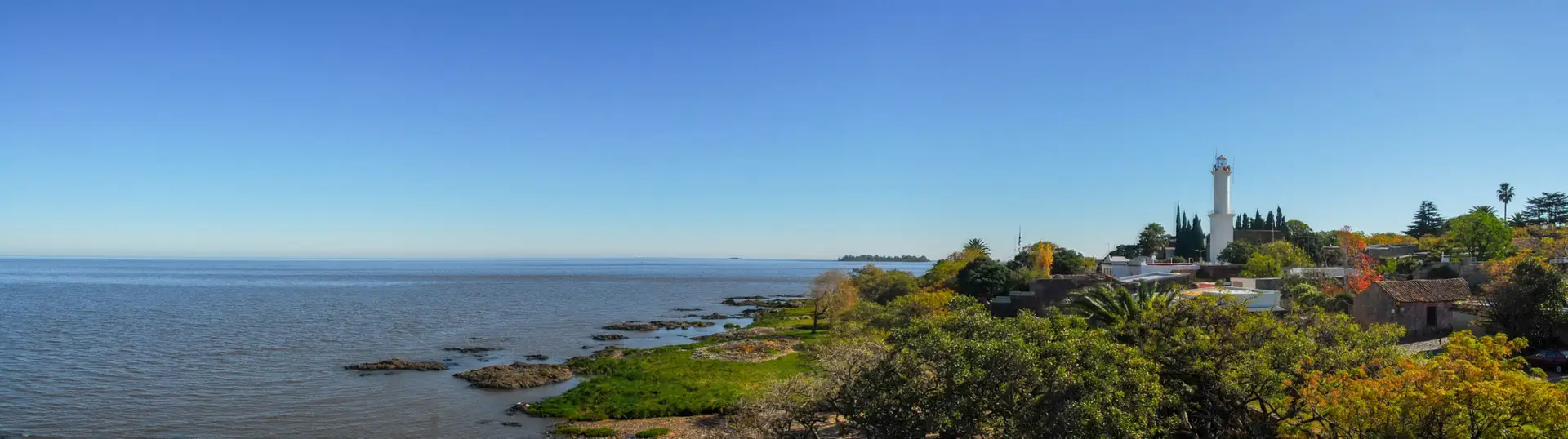
Colonia del Sacramento seems to require a different approach.
Walk.
Then walk some more.
Stop for coffee.
Forget what time it is.
That sounds about right.
Its historic quarter has the cobbled streets, old buildings and weathered walls you’d expect, but one piece of advice kept showing up as I researched the town:
Stay after the day visitors leave.
Now that got my attention.
I’ve experienced enough places before and after the crowds to know they can feel completely different. Streets get quieter. You notice things you walked right past earlier. Evening light changes the buildings.
And suddenly you’re experiencing a place rather than maneuvering through it.
I suspect Colonia is one of those places where I’d want to spend the night even if technically I could see it in a day.
Sometimes being able to do something quickly isn’t a particularly good reason to do it quickly.
Following the Coast
Before working on Uruguay, I would have associated its coastline almost entirely with Punta del Este.
That didn’t last long.
Punta del Este certainly earns its reputation. Beaches, marinas and summer crowds are all part of its personality.
But keep following the coast and things begin to change.
Piriápolis doesn’t feel quite like Punta del Este. José Ignacio has its own personality. Go farther and there are smaller communities, fishing villages, rocky shoreline and long beaches where the ocean itself seems to be enough of an attraction.
That’s the Uruguay coast that really started pulling me in.
I’m also not convinced I’d want to see it at the height of summer.
I’ve traveled enough to know that I usually prefer places when they’re slightly less busy. Shoulder season gives me more room, fewer crowds and often a completely different feel for a destination.
I’ll happily trade the “perfect” season for that.
Uruguay’s coast strikes me as a place where that trade might pay off particularly well.
A Few Places I Didn’t Expect
One of my favorite parts of researching a country is finding the thing that makes me stop scrolling.
Uruguay gave me several.
Casapueblo was one of them.
The first time I saw it, I wasn’t quite sure what I was looking at. It seemed part building, part sculpture and part something somebody simply kept adding to because they weren’t finished yet.
I mean that as a compliment.
Its white walls tumble down the hillside overlooking the water, and there’s nothing particularly restrained about it. After looking at so much of Uruguay’s quieter landscape, Casapueblo felt like a wonderful contradiction.
Then I started noticing the lighthouses.
One here. Another there.
Standing along a coast that has depended on the sea for generations, they seem less like attractions and more like punctuation marks along the journey.
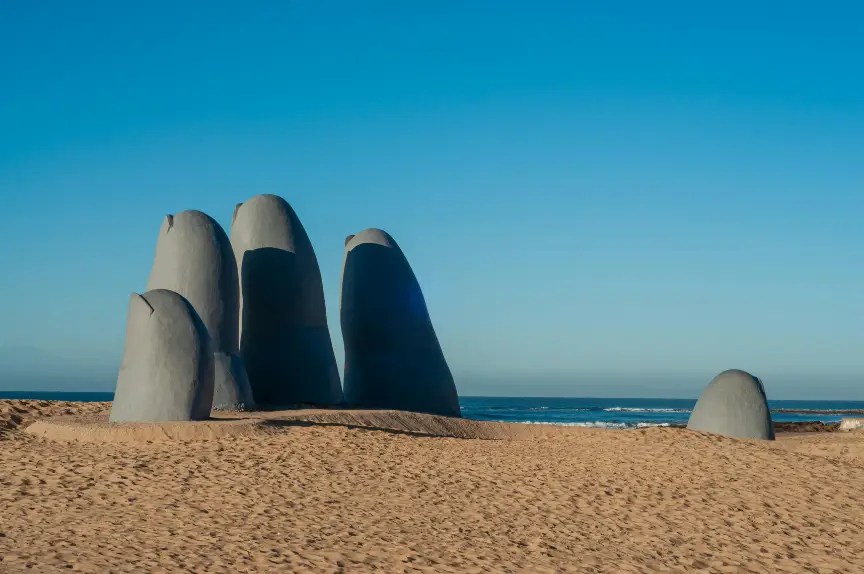
And yes, there’s La Mano, the giant hand emerging from the sand at Punta del Este.
I’d seen that photograph plenty of times before. I just hadn’t given much thought to where it was.
Now I know.
That’s one of the things I enjoy about doing these country series. Places I’ve seen in photographs for years suddenly acquire context.
They stop being random pictures and start belonging somewhere.
Uruguay at the Table
I would have absolutely no difficulty with the food portion of this trip.
Let’s establish that immediately.
Uruguay takes its asado seriously, but what interested me wasn’t simply the meat cooking over a fire. It was the gathering around it.
People aren’t supposed to inhale dinner and leave. They talk. They linger. They spend time together.
Some of my favorite memories from forty-plus years of travel have happened around tables. I may remember what we ate, but more often I remember who was sitting there, what we talked about and how an ordinary meal somehow lasted three hours.
So yes, asado makes sense to me.
Mate is different, but the idea of connection runs through that tradition too. It’s not simply something you drink. It’s something shared.
And then Uruguay surprised me again with wine.
Tannat.
I knew the grape. I didn’t immediately associate it with Uruguay.
Apparently I should have.
The country’s vineyards add another dimension to a place I’d originally pictured mostly in terms of cities and coastline.
At this point my imaginary Uruguay itinerary is getting longer.
This happens.
And Then There’s the Countryside
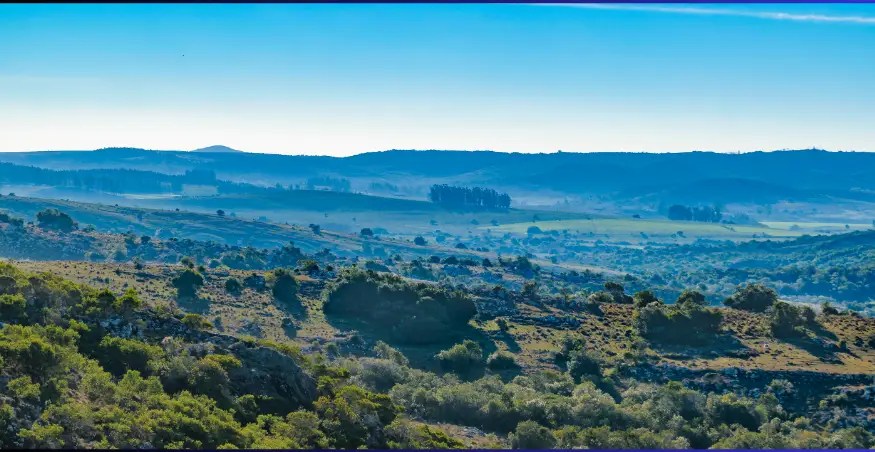
The countryside may have been the biggest surprise for me.
Not because it’s dramatic.
Because it isn’t.
There are rolling hills, open grasslands, working estancias and roads disappearing toward the horizon.
No Andes towering in the background. No Patagonian peaks demanding that you stop the car.
Just space.
And I found myself lingering over those photographs longer than I expected.
There is something wonderful about a landscape that doesn’t have to overwhelm you to be beautiful. Sometimes you just want to drive, see what’s ahead and have enough room around you to notice.
I could do that in Uruguay.
Quite happily.
Uruguay Moved Up My List
That’s probably the biggest thing I took away from this Discover Series.
Uruguay wasn’t particularly high on my travel list when I started.
It is now.
Not because I discovered one spectacular place that I simply have to see. In fact, almost the opposite happened.
I discovered a collection of things that fit the way I like to travel.
I want to wander through Ciudad Vieja and photograph the doors.
I’d like to see Colonia after the day visitors have gone.
I’d follow the coast without feeling particularly obligated to stop at every beach town.
I’d sit along the Rambla and watch Montevideo go about its day.
I’d happily lose several hours to an asado.
And I’d leave some time completely unplanned because Uruguay seems like the sort of place where that might be the best part.
Maybe I’ll eventually get there and discover I had it completely wrong.
That’s part of travel too.
But sometimes researching a destination changes the way you see it long before you ever arrive.
Uruguay did that for me.
It quietly moved onto the list.
And I have a feeling it may stay there until I finally go.
Let me know if you have been and what your impressions are.
Until next time, happy traveling!














Join the Discussion