Brazil Beyond the First Impression
Jordan: More Than Petra
Petra is the problem with Jordan.
Not because there is anything wrong with Petra. Quite the opposite. It is so recognizable, so dramatic, and so firmly planted on travel wish lists that it has a tendency to become Jordan.
I started researching this Discover Series knowing Petra would be part of it. Of course it would. The Treasury, the Siq, the Monastery. I expected all of that.
What I didn’t expect was how quickly Petra stopped being the whole story.
Jordan kept getting bigger.
Starting in Amman
Amman was my first clue.
This isn’t a capital where the old city has been neatly separated from everything happening today. Ancient stone and Roman ruins sit alongside a modern city that continues to grow around them.
I like places where history isn’t tucked away behind a gate.
Then there is Jerash, where columns, arches and stone streets make the Roman past considerably harder to ignore.
And just when I thought I was beginning to understand Jordan, I found Ajloun.
Green Jordan.
That wasn’t really in the picture I had in my head.
Forested hills, countryside and a centuries-old castle are a long way from the desert landscape I had automatically associated with the country.
Research rabbit hole number one.
A Country Built in Layers
Madaba brought another surprise.
The city is known for its mosaics, including extraordinary historic examples, but what interested me just as much was discovering that mosaic making didn’t simply become something preserved from the past.
The craft continues.
Tiny pieces. Patient hands. Patterns slowly becoming something recognizable.
Those are the things I would want to stop and watch.
Nearby, Mount Nebo adds another layer. History, faith and geography come together in a place where the view across the landscape is part of the experience.
Then there is Little Petra.
I’ll admit it. Anything called Little Petra was going to get my attention.
But it isn’t simply a miniature version of its famous neighbor. It offers another glimpse into the Nabataean world, with carved façades and narrow passages of its own.
If I were planning my first trip, I think I’d visit Little Petra before Petra.
Consider it the opening act.
And Yes, Petra
Eventually, we have to talk about Petra.
I’d want the Treasury photograph. I’m not even going to pretend otherwise.
But one of the things this research reinforced for me is how much travelers miss if they treat that famous façade as the destination.
Petra keeps going.
There are tombs, trails, carved façades and, eventually, the Monastery.
Getting there involves a rather impressive number of steps.
I am fairly certain somewhere during that climb I would begin questioning why I thought this was a good idea.
I am equally certain I would keep going.
Some views make you work for them.
The Places Between the Famous Places
As-Salt is exactly the sort of place that tends to sneak onto my list.
Yellow stone buildings climb the hills. Streets and stairways seem to head in every possible direction. Markets, storefronts and everyday life fill the spaces between the landmarks.
Give me an hour with nowhere I absolutely have to be and I’d be perfectly happy.
Probably lost.
But perfectly happy.
Those places matter to me when I travel. The famous sights may give you a reason to go somewhere, but ordinary streets often give you a better sense of the place once you arrive.
Then There’s the Food
Obviously, research eventually led me to breakfast.
It usually does.
Fresh bread, falafel, hummus and a table filled with things meant to be shared sounds like a perfectly reasonable way to begin a day.
Jordanian coffee caught my attention for a different reason. The coffee itself matters, but so does everything surrounding it: welcome, hospitality, conversation and time.
Come. Sit. Stay awhile.
That’s a travel philosophy I can get behind.
Later there is mansaf, traditionally shared rather than treated simply as an individual meal.
And markets.
Spices. Olives. Produce. Food cooking somewhere nearby.
This is exactly why I should never be trusted to maintain an itinerary near a market.
Then, because apparently Jordan hadn’t done enough damage to my imaginary schedule, I discovered knafeh.
Warm cheese. Sweet syrup. Pistachios.
I consider trying it important cultural research.
Wadi Rum Isn’t Empty
Wadi Rum was another place I thought I understood before I started looking closer.
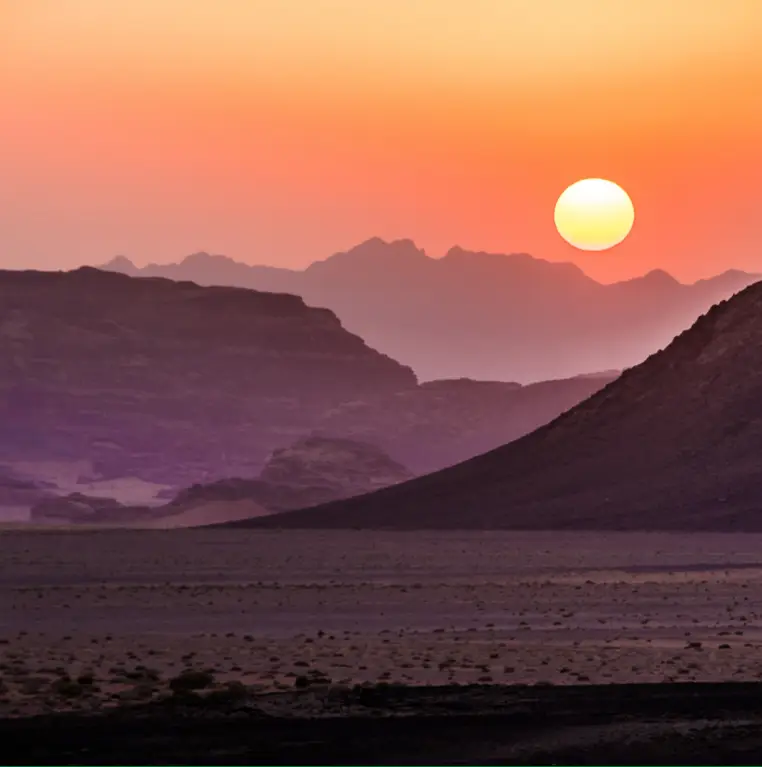
Desert. Sand. Rock formations. Huge landscapes.
Yes.
But calling it an empty desert misses the point.
People have lived within this landscape for generations. Bedouin traditions, knowledge of the land, hospitality, cooking and weaving are part of Wadi Rum’s story too. The desert isn’t simply scenery surrounding those traditions. It helped shape them.
That distinction matters.
I would want the sweeping landscape photographs. Absolutely.
But I would also want time to learn about the people who call this landscape home.
And then I’d stay for sunset.
And probably say, “five more minutes” until five minutes somehow became an hour.
From the Lowest Place to the Red Sea
By this point in my research, Jordan had already gone from Roman cities to green hills, mosaics, Nabataean ruins and desert.
Then it changed again.
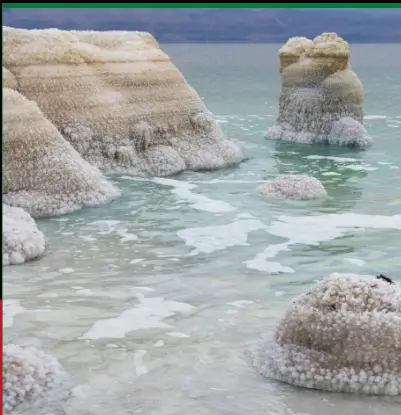
The Dead Sea brings an entirely different landscape, with mineral-rich water, salt-lined shores and the distinction of sitting at the lowest exposed point on Earth.
Yes, I would float.
There would be photographic evidence.
Not far away, Bethany Beyond the Jordan brings history and faith back into the journey along a river that looks surprisingly modest considering the centuries of meaning attached to it.
And farther south?
Aqaba.
The Red Sea.
This one genuinely caught me by surprise.
Jordan had become so firmly connected to desert and ancient stone in my imagination that blue water wasn’t part of the picture.
It is now.
Aqaba adds beaches, coral and marine life to a country that apparently wasn’t finished surprising me.
The Jordan I Didn’t Know
That’s really what happened while building this series.
I started with Petra.
Then Jordan got bigger.
Amman and Jerash added cities and ancient history. Ajloun added green hills. Madaba added mosaics and living craft. As-Salt added streets I would happily wander. Wadi Rum became more than desert. The Dead Sea changed the landscape again. Aqaba added the Red Sea.
And food, markets, coffee, weaving and hospitality made the country feel more human.
I haven’t been to Jordan.
So I can’t tell you what my favorite place is, which meal I’d order twice or which unexpected stop would become the story I kept telling after I came home.
That’s part of what I enjoy about these Discover Series.
Sometimes research confirms what I already thought I knew.
Sometimes it completely rearranges the map in my head.
Jordan did the latter.
Petra would still be on my first itinerary.
It just wouldn’t be the whole itinerary anymore.
Have passport, will travel.
Until next time, happy traveling!





Join the Discussion