Brazil Beyond the First Impression
Tanzania: A Place That Has Stayed On My List
There are places you add to a travel list because you saw a beautiful photograph.
There are places someone tells you about and you think, that sounds interesting.
And then there are the places that somehow stay with you for years.
Tanzania has been one of those places for me for nearly 40 years.
I can’t point to one moment when it landed on my list. Maybe it was the wildlife. Maybe Kilimanjaro. Maybe those enormous East African landscapes I saw in photographs long before we could pull up thousands of them on a phone.
Whatever started it, Tanzania never left.
I’ve traveled to a lot of places since then. Tanzania still isn’t one of them.
Yet.
And perhaps that’s why researching it for the Discover Series has been so much fun. I wasn’t trying to recreate a trip I’d already taken. I was finally giving myself permission to wander around a place I’ve wanted to see for a very long time.
As usual, I found much more than I expected.
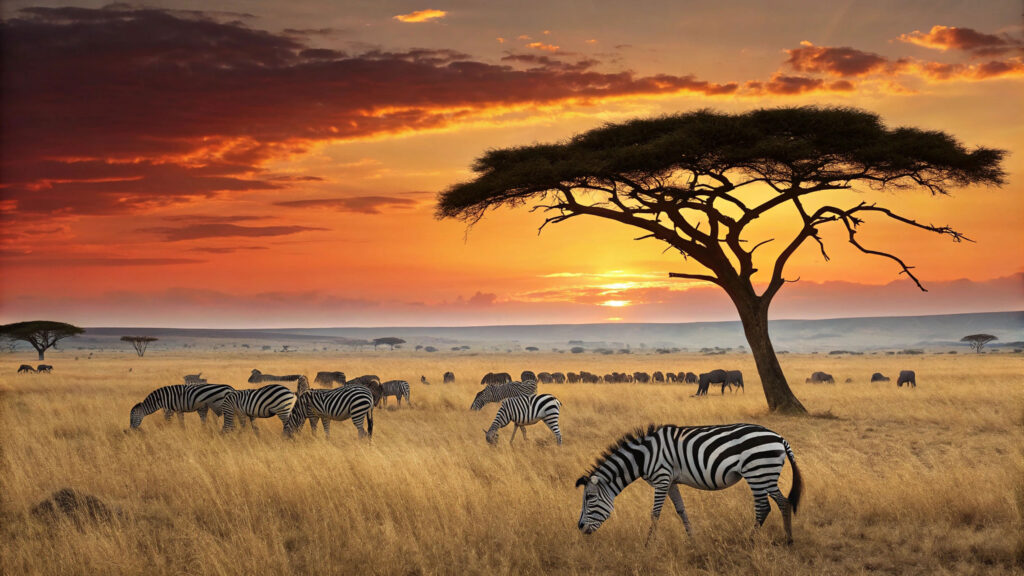
Yes, There Is Wildlife. Lots of It.
You can’t talk about Tanzania without talking about wildlife.
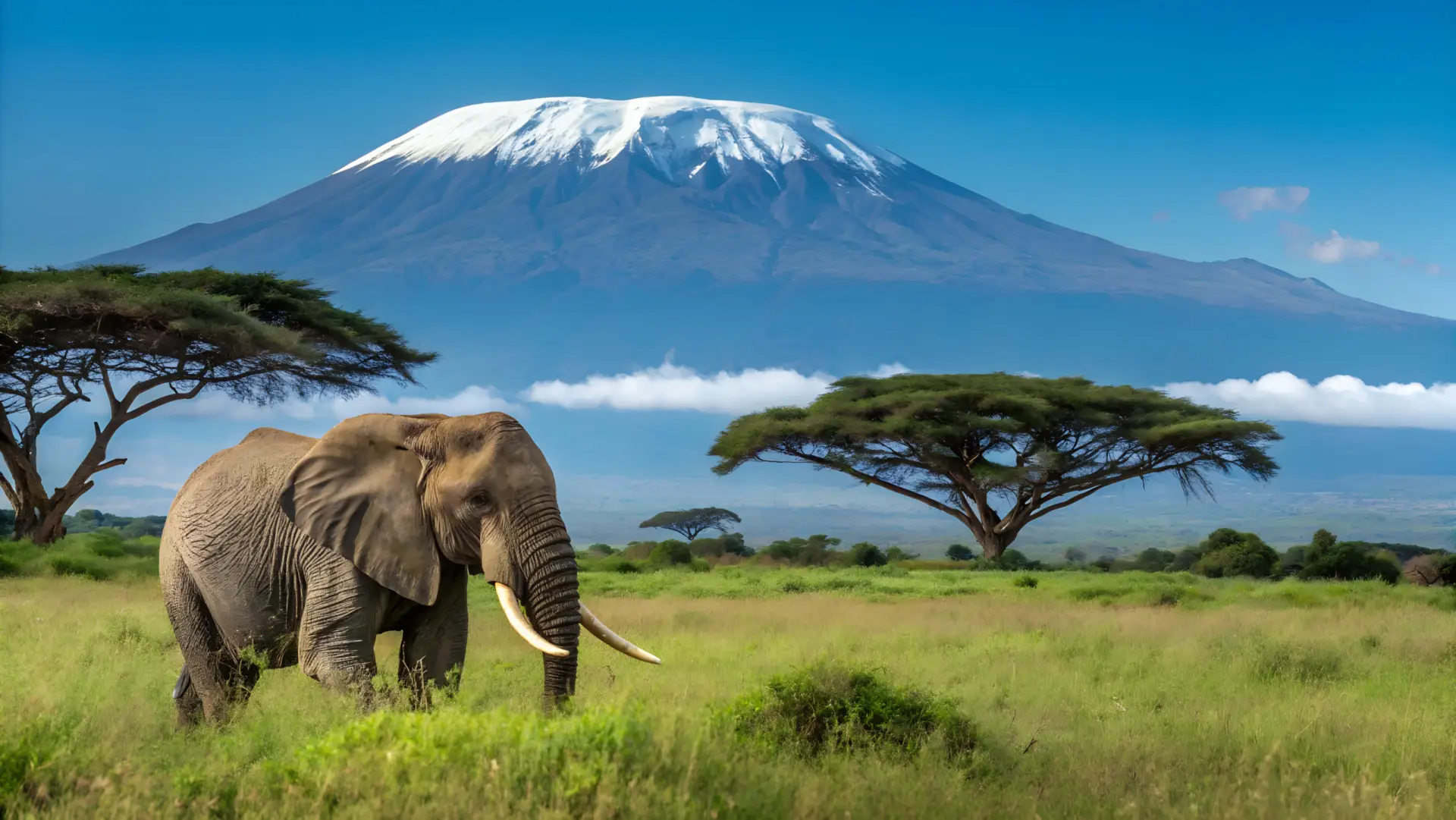
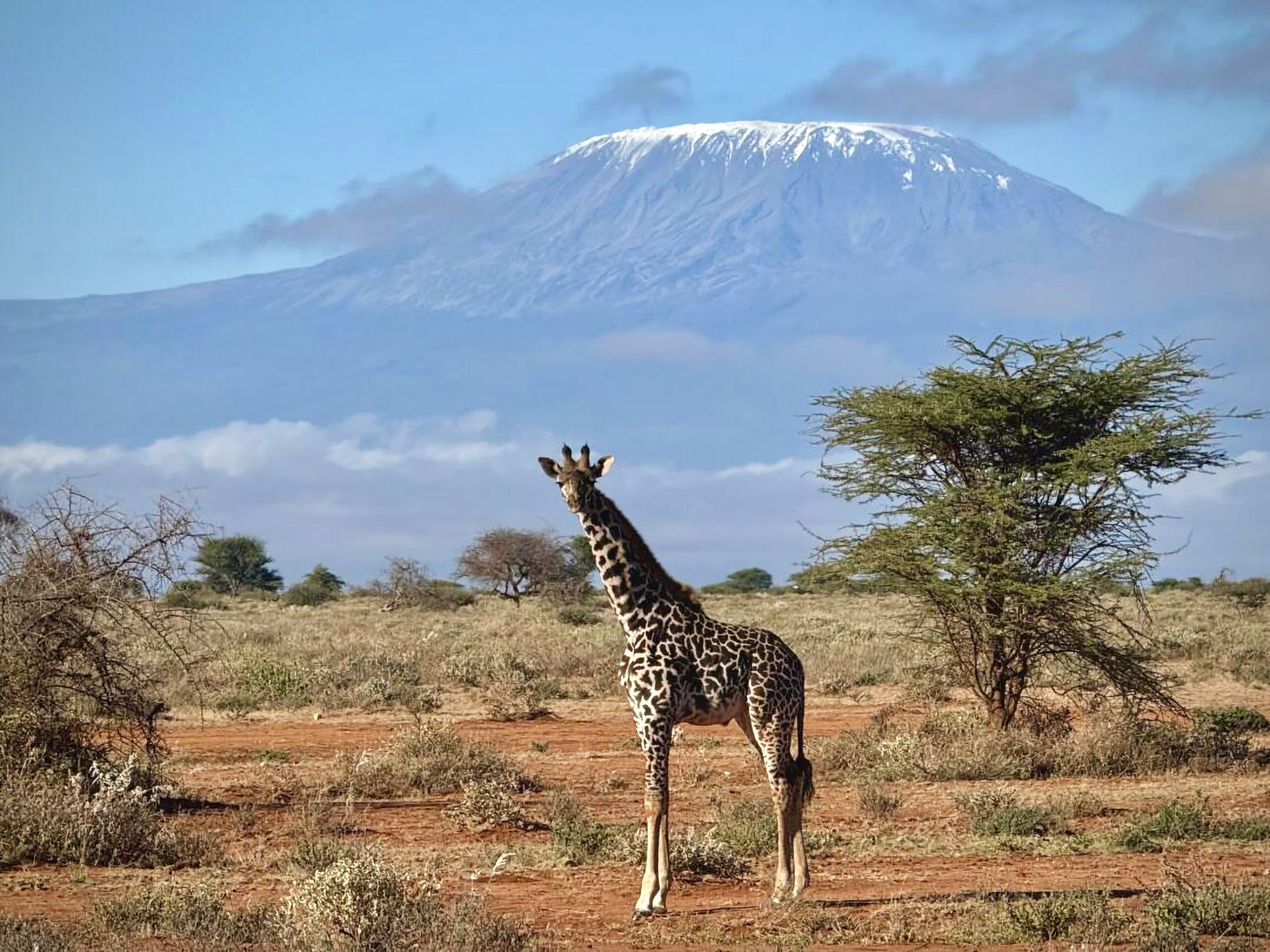
The Serengeti alone is one of those names that hardly needs an introduction. Wildebeest moving across the plains. Zebras mixed among enormous herds. Lions watching from the grass. Elephants, giraffes, cheetahs and more wildlife than most of us could identify without help.
Then there is Tarangire, with its elephants, baobab trees and landscapes that immediately made me stop while I was sourcing photographs.
And that is exactly where I don’t want to turn Tanzania into a checklist.
Lion? Check.
Elephant? Check.
Giraffe? Check.
Next.
That’s not what interests me.
I want to see the animals, of course. I’d probably be the person with far too many elephant photographs before lunch.
But I want to watch.
How does a herd move together? What happens around a water source? What does the landscape look like when you stop focusing on the lion in the middle of the photograph?
The more I researched Tanzania, the more the wildlife became part of a much larger story.
The Landscape Is Doing a Lot of the Work
Tanzania doesn’t have one look.
That’s one of the things that struck me while building this series.
There are the wide grasslands most of us associate with the Serengeti. Then suddenly you’re looking at baobabs in Tarangire. There are forests, lakes and volcanic landscapes.
And then there is Kilimanjaro.
You knew I wasn’t going to get very far without mentioning it.
At 5,895 meters, Kilimanjaro is Africa’s highest mountain. It rises independently rather than as part of a mountain range, which somehow makes photographs of it even more dramatic.
Would I climb it?
Let’s not get carried away.
Would I happily stare at it, photograph it from multiple angles and congratulate everyone who does climb it?
Absolutely.
Travel doesn’t require conquering everything you see.
Sometimes looking up is enough.
Then I Fell Into Olduvai Gorge
This is one of the reasons I love researching a place before I travel.
I knew about Olduvai Gorge. I knew about Louis and Mary Leakey and their work in East Africa.
But knowing the name of a place and stopping long enough to understand why it matters are two very different things.
Olduvai Gorge is part of the Ngorongoro Conservation Area and contains an extraordinary archaeological record spanning roughly two million years. Discoveries there have played an important role in understanding human evolution.
This would absolutely be on my Tanzania itinerary.
Not as a quick stop between wildlife sightings.
I’d want enough time to stand there and think about the enormous stretch of human history represented by the landscape around me.
Places like this put our individual travels into perspective.
We arrive.
We look around.
We leave.
The landscape has been telling stories for millions of years.
Tanzania Grows Things, Too
This was another research turn I was glad we included in the Discover Series.
It’s easy for travel content about Tanzania to become dominated by safari imagery. But agriculture is an important part of Tanzanian life and its economy, employing a large share of the country’s population. Crops include maize, cassava, rice, bananas, coffee, tea, cashews, cotton and others, with agricultural landscapes changing significantly from one region to another.
And frankly, this is the sort of thing I enjoy seeing when I travel.
Give me a local market.
Show me what’s growing.
Let me see what appears on a plate because it was grown nearby.
Those everyday connections often tell me more about a place than another stop at something labeled a “must-see.”
Coffee country particularly has my attention.
No one is surprised by this.
And Eventually, Zanzibar
Then we reach the Indian Ocean.
Zanzibar changes the visual story completely.
Suddenly we’re away from grasslands and mountains and looking at turquoise water, beaches, fishing boats and the narrow streets and carved doors of Stone Town.
Stone Town is a UNESCO World Heritage Site, shaped over centuries by African, Arab, Indian and European influences and by Zanzibar’s position within Indian Ocean trade networks.
And then there are the spices.
Cloves in particular became deeply connected with Zanzibar, but spice farms today introduce visitors to everything from cinnamon and nutmeg to vanilla, turmeric and tropical fruits.
Yes, I’d take the spice tour.
I’d probably ask too many questions.
And I’d absolutely buy something I was convinced I’d use at home before finding it in the back of a cabinet two years later.
Some travel behaviors are predictable.
The Tanzania I Want to See
After spending all this time researching Tanzania, my imaginary first trip has become longer rather than shorter.
That’s usually a problem.
I want the wildlife, but I don’t want to race from animal to animal.
I want Serengeti.
I want Tarangire and those ridiculous baobab trees.
I want to see Kilimanjaro even if my relationship with it remains firmly at ground level.
I want time at Olduvai Gorge.
I want markets, farms and ordinary landscapes between the famous ones.
And after all of that, I’d like to finish on Zanzibar, preferably somewhere I can watch the Indian Ocean while eating something I can’t quite identify without asking.
That sounds about right.
Forty Years Is Long Enough
Some destinations move on and off our lists as our interests change.
Tanzania hasn’t.
If anything, researching it has made me wonder why I’ve allowed nearly four decades to pass without getting there.
There is a temptation with a long-held dream trip to keep waiting for the perfect version.
The perfect itinerary.
The perfect season.
Enough time.
Enough money.
The right travel companion.
Eventually, though, perhaps you simply have to go.
Tanzania remains one of my dream destinations.
But after spending several weeks looking more closely at its wildlife, landscapes, agriculture, history, people and coast, it feels a little less like an abstract place on a list.
Now I know some of the things I’d look for.
And, perhaps more importantly, I know I’d leave room for the things I haven’t found yet.
Because after 40 years of travel, that part hasn’t changed.
Plans are suggestions. The unexpected is the magic.
Have passport, will travel.
Until next time, happy traveling!










Join the Discussion